Why do some families seem to have multiple generations of UAP contact?
The pattern of multi-generational encounters suggests something far stranger than chance
Some families report UAP contact across three, four, even five generations. Grandmothers describe childhood encounters with luminous beings. Their daughters experience missing time and telepathic communication. Their grandchildren wake with unexplained marks. The phenomenon tracks bloodlines with unsettling consistency, and the data we have, scattered and incomplete as it is, points to something genuinely anomalous. This isn't folklore passed down around campfires. These are independent experiences, often unknown to other family members until someone finally breaks the silence.
See a short answer and related videos →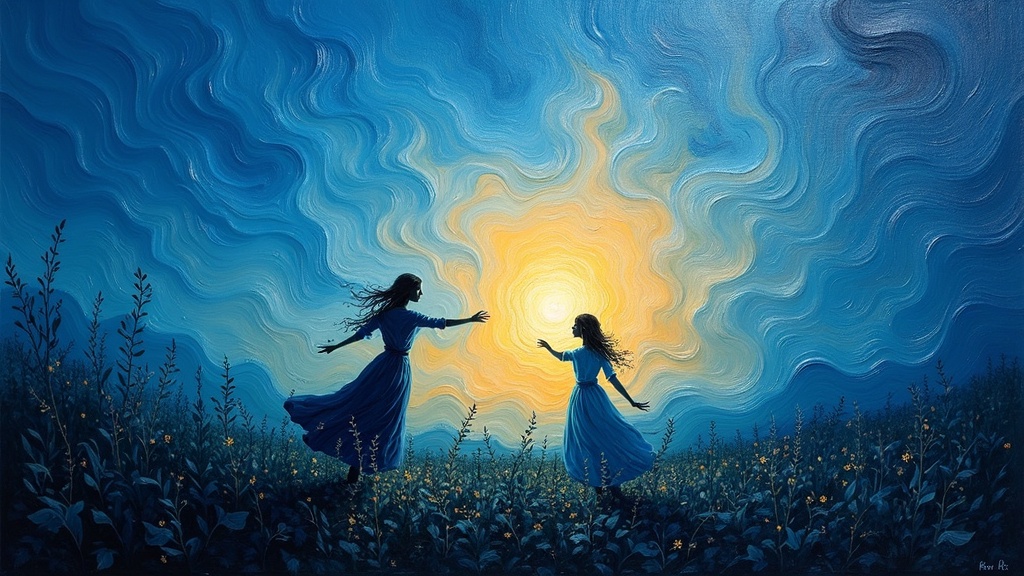
I've spent years reviewing encounter reports, and the generational pattern shows up so often it can't be coincidence. We're talking about families where multiple members, sometimes separated by decades and geography, report strikingly similar experiences with non-human intelligence. The grandmother sees craft over rural farmland in 1952. The daughter experiences missing time on a highway in 1981. The grandson wakes paralyzed with figures at his bedside in 2019. Same telepathic quality. Same aftermath of confusion and physical marks.
The conventional explanations don't hold water. Cultural transmission? Sure, families share stories. But many of these experiencers didn't know about their relatives' encounters until much later, sometimes not until after their own contact. One account on Reddit from a multi-generational family describes experiences spanning grandmother, mother, and children, with events occurring before family members had shared their stories with each other. The pattern emerges independently.
Sleep paralysis and shared psychology? That doesn't explain the physical trace evidence, the multiple-witness sightings, or the cases where different family members see the same craft decades apart in different states. Something else is happening here.
The genetic hypothesis that nobody wants to touch
Here's where it gets uncomfortable. If we take the experiencer accounts seriously, and if we accept that the phenomenon shows genuine physical effects, then we have to consider that contact might be targeting specific genetic lineages. Dr. Garry Nolan at Stanford has been studying this angle, analyzing blood samples from UAP witnesses and finding unusual genetic markers. He's careful not to overstate his findings, but the implication is clear: whatever is making contact may be selecting for specific biological traits.
That's a hard pill to swallow. It suggests intentionality. It suggests monitoring across time. It suggests that whatever these intelligences are, they're tracking human bloodlines with the kind of long-term attention we reserve for longitudinal scientific studies.
Nolan's work focuses on immune system genes and neurological markers. Some experiencers show elevated levels of certain proteins associated with brain connectivity. Others have unusual variations in genes related to the caudate-putamen, brain structures involved in learning and intuition. The sample sizes are small, the research is preliminary, but the pattern is there. And it aligns with what experiencers have been saying for decades: this runs in families.
What experiencers actually report
The accounts themselves are remarkably consistent. I'm not talking about vague lights in the sky. I'm talking about detailed, multi-sensory encounters with beings that communicate telepathically, that seem to know intimate details about the experiencer's life and family history, that reference previous generations.
One recurring theme: the beings acknowledge the family connection. They tell experiencers, "We've been with your family for a long time." Or "Your grandmother knew us." These aren't random abductions. They're framed as ongoing relationships, sometimes going back generations.
The physical marks are another consistent element. Scoop marks, triangular burns, puncture wounds appearing overnight with no memory of injury. When these marks show up on grandmother, mother, and daughter, all in similar locations, all following similar experiences, you're looking at a pattern that demands explanation.
The consciousness connection nobody's studying properly
Here's my digression, and it matters: I keep coming back to the work of John Mack, the Harvard psychiatrist who studied experiencers in the 1990s and concluded they were reporting genuine encounters with non-human intelligence. Mack noted that many experiencers reported shifts in consciousness, expanded awareness, and what he called "ontological shock" that changed their fundamental understanding of reality. He also noted the generational patterns. But here's what frustrates me: Mack was studying this from a therapeutic perspective, not a genetic one. Nobody followed up with family genetic studies. Nobody mapped the bloodlines systematically. We lost decades because the stigma was so intense that even asking these questions could end a career. Mack himself faced investigation by Harvard Medical School for his research, an unprecedented attack on academic freedom that sent a clear message to other researchers: stay away from this topic.
What if consciousness itself is heritable in ways we don't understand? What if certain genetic configurations make individuals more perceptible to non-human intelligence, or more capable of the kind of expanded awareness that allows contact? We're only beginning to understand the genetic basis of consciousness, but we know that traits like synesthesia, exceptional memory, and even mystical experiences have genetic components. Why wouldn't receptivity to non-human contact?
The hardest objection: mass delusion and family mythology
Let me address the strongest counterargument head-on, because it's the one that keeps me up at night. Maybe generational contact is just family mythology that takes on a life of its own. Grandmother has sleep paralysis, interprets it through the cultural lens of alien abduction, tells her daughter, who then experiences her own sleep paralysis and interprets it the same way. The family creates a shared narrative that reinforces itself across generations. The marks? Dermatological conditions, unconscious self-harm, confirmation bias. The telepathy? Confabulated memories and the power of suggestion.
I've sat with this objection for years. It's the most rational explanation, and it probably accounts for some percentage of cases. But it doesn't account for the cases with physical trace evidence, multiple independent witnesses, and sensor data. It doesn't explain the families where contact occurs before family members know about previous generations' experiences. And it really doesn't explain the genetic markers Nolan is finding.
The weaker objections, I'll dismiss quickly: "They're all lying for attention." No. The stigma is too severe, the social cost too high. Why do some UAP witnesses risk their careers to come forward? Most experiencers I've encountered would give anything to not have these experiences. "It's all government psyops." Sure, maybe some cases. But across 70 years, across dozens of countries, targeting random families? The logistics alone make that absurd.
What the data actually shows
A Reddit thread from researchers asking about generational patterns found consistent reports from multiple independent investigators. MUFON case files show family clustering. The work of researchers like Budd Hopkins and David Jacobs, controversial as they are, documented generational patterns in hundreds of cases. Even another family account on Reddit describes multi-generational experiences with remarkable specificity.
The phenomenon shows up in roughly 30-40% of experiencer families, based on informal surveys. That's not a majority, but it's far higher than random chance would predict. And the pattern intensifies when you look at families with multiple experiencers: if two family members report contact, the likelihood of a third family member also reporting contact jumps significantly.
We don't have rigorous epidemiological studies because funding for this research doesn't exist. The stigma is still too intense. But the informal data from decades of investigation points clearly to a genetic or familial component.
The monitoring hypothesis
If we accept that generational contact is real and not purely psychological, we're left with an uncomfortable conclusion: non-human intelligence is conducting long-term monitoring of specific human lineages. The timescale is what gets me. We're talking about observation and interaction spanning 50, 60, 70 years or more. That's not reconnaissance. That's not random sampling. That's a longitudinal study.
What are they studying? Theories range from genetic experiments to consciousness evolution to something we don't have concepts for yet. The experiencer accounts suggest all of the above. Some report medical procedures and reproductive focus. Others report educational experiences, downloads of information, preparation for future events. The variety of reported purposes makes it harder to draw conclusions, but the consistency of the generational pattern remains.
Jacques Vallée, who has studied this phenomenon longer than almost anyone, suggests that the contact experience itself might be the point, that the phenomenon is engaged in a long-term conditioning or acculturation process. If that's true, then generational contact makes perfect sense. You're not just studying individuals, you're studying how human consciousness and culture change across time in response to contact.
Where the research should go
We need genetic studies of experiencer families. Full genome sequencing, not just targeted markers. We need to map the bloodlines, track the patterns, and see if specific genetic configurations correlate with contact experiences. Nolan's work is a start, but it needs to scale up significantly.
We need longitudinal psychological studies that follow experiencer families across decades, documenting experiences as they occur rather than relying on retrospective accounts. We need to separate genuine anomalous experiences from cultural transmission and psychological factors.
And we need to take the consciousness angle seriously. If contact experiences involve expanded states of awareness, if they're facilitated by specific neurological configurations, then we need to study the phenomenology of contact with the same rigor we apply to other altered states. The work being done on psychedelics, meditation, and near-death experiences provides methodological frameworks we could adapt.
But none of this will happen without funding and institutional support. And that won't happen until the stigma breaks. We're in a catch-22: we need data to take the phenomenon seriously, but we can't get data because taking it seriously is career suicide.
What I keep coming back to
The grandmother who saw them in 1952 is in her 80s now. Her daughter, who had missing time in 1981, is in her 60s. Her grandson, who wakes with marks, is in his 30s. Three generations. Same phenomenon. Same beings, if the descriptions are accurate. Same telepathic quality. Same physical aftermath.
That's not sleep paralysis. That's not cultural mythology. That's something tracking a family across 70 years.
I don't know what it means. I don't know if we're looking at genetic experiments, consciousness studies, preparation for contact, or something we don't have frameworks to understand. But the pattern is there, documented in thousands of cases, consistent across cultures and decades.
Whatever is making contact with humanity isn't doing it randomly. It's selecting. It's monitoring. It's returning to the same families, generation after generation. And until we're willing to study that pattern seriously, without stigma or dismissal, we're flying blind.
References
- 1.
- 2.
- 3.
- 4.[Book]Mack, John E. Abduction: Human Encounters with Aliens. Scribner, 1994.
- 5.[Book]Vallée, Jacques. Passport to Magonia: On UFOs, Folklore, and Parallel Worlds. Contemporary Books, 1993.
Was this article helpful?