John Davis Dies During Surgery, Discovers Heaven's Orientation Center
A six-minute death revealed a two-hour journey through marble halls where counselors welcome the newly deceased home
John Davis closed his eyes on an operating table and opened them in a building of perfect white marble. Endless corridors stretched before him, lined with ornate doorways cut into stone. At tables between each doorway sat pairs of people, deep in conversation. A voice in his left ear explained what he was seeing: an orientation center, a place where the newly dead remember who they really are. He had been clinically dead for six minutes, but what he experienced felt like two hours of the most detailed tour of the afterlife he could imagine. And it all started with a squirrel in the road.

The Accident That Changed Everything
John Davis wasn't thinking about death when he borrowed his parents' moped. He was just riding, taking a corner fast, when he saw it: a squirrel sitting in the middle of the road. In that split second, he made a choice. He yanked the handlebars right to avoid the animal and crashed straight into a tree.
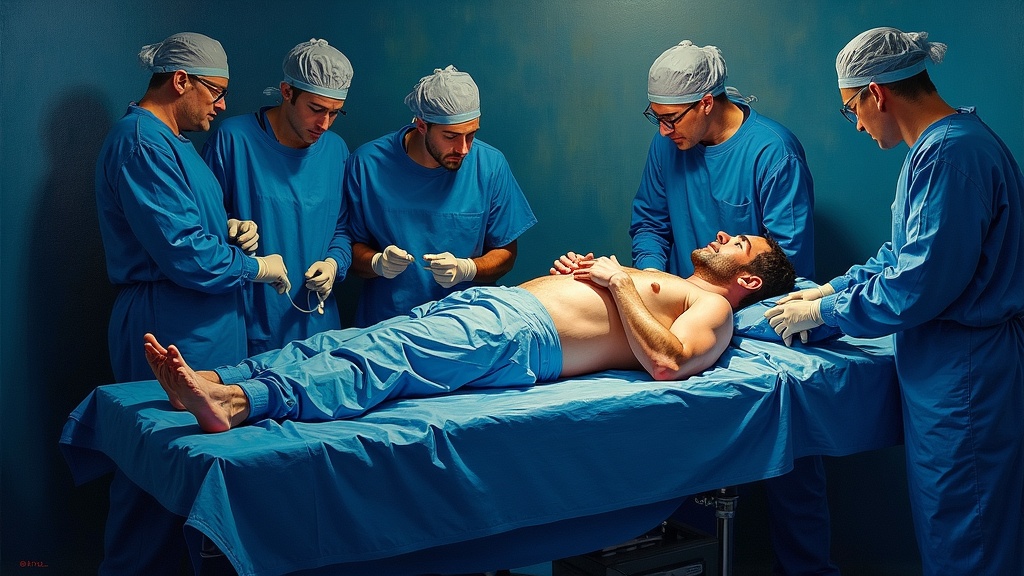
The impact was severe. "I hit in such a way that I had to have the tendons on my right hand surgically reattached to the bone," John explains. He had never had surgery before. He didn't know what to expect from anesthesia. He certainly didn't expect to die.
On the day of the surgery, nurses inserted an IV and began the anesthesia drip. John felt the medication moving through his body in real time. "I could feel it going through my body, up through my arms, into my shoulders, down through my neck, and then my chest, and then to my heart," he recalls. "In the very second that it hit my heart, my heart stopped."
He closed his eyes and died.
Opening Eyes in Another World
"The very second that I shut my eyes and died, I opened up my eyes and I was standing in the most beautiful, perfect marble building that I could ever imagine," John says. There was no transition, no tunnel of light leading him there. One moment he was on the operating table. The next, he stood in a structure unlike anything on Earth.
The building was vast. Corridors extended as far as he could see, with no visible end. On the left side were doorways, ornate openings that looked "like they had been cut out of the marble." To the right of each doorway, about four feet away, sat tables with four benches. People occupied these tables in pairs, engaged in quiet conversation.
From the moment he arrived, John wasn't alone. "There was somebody who was standing next to me who was talking to me in my left ear," he explains. "I never saw this person, but throughout my whole near-death experience, it was a guy who was standing next to me telling me what I was seeing and what I was looking at."
This guide's first words were simple: "This was an orientation center."
John didn't think about the surgery. He didn't wonder about the allergic reaction that had stopped his heart. "That didn't even occur to me," he says. "I was totally, simply engrossed in what I was seeing."
Tunnels to the Stars
The guide directed John to approach the first doorway and look inside. What he saw defied the logic of architecture and space. "Inside the tunnel, I could see stars, and I could see planets, and I could see galaxies," John describes. "It was absolutely a magical experience."
The guide explained: "That is a tunnel that people come through when they die."
Each doorway was a portal. Each one connected to somewhere else in the universe, a pathway souls traveled from their point of death to this marble hall. The orientation center wasn't just a building. It was a hub, a central station where beings from across existence arrived after leaving their physical lives.
Watching Someone Come Home
The guide told John to look at the next doorway. "There was a man that was coming through, and he had his right arm on his left chest," John recalls. The guide identified him immediately: "He had died from having a heart attack."
The man looked lost. "He looked very dazed, he looked very confused about what was going on," John says. But the woman sitting at the table in front of his doorway knew exactly what to do. She stood, walked to him, and "took his hands in hers, and she walked over and she sat him down across from her at this table."
John watched her speak to the man, though he was too far away to hear the words. But he could see the effect. "His appearance began to change," John explains. "He was an 80-year-old man when he came through the doorway, but as he was talking to this counselor, he became younger and younger until he was probably in his late 20s or early 30s."
The woman was an orientator. "Her job as an orientator was to help people remember that they have just finished a lifetime and that they're home now," John says. "Whether you want to call it heaven or you want to call it the other side, that's our true home."
When the conversation ended, the man stood. He walked to the right of the table and descended three marble steps into a garden.
The Garden of Reunion
"I know people have described gardens on the other side, that they're absolutely beautiful, but they are so hard to describe how beautiful they really are," John says. "The gardens were almost like they were alive."
As the man entered the garden, people appeared. "There were people there, a lot of people, and they were there to greet him from coming back from his life," John describes. "They were hugging him, kissing him, welcoming him home, saying what a great job you did, you did great, now you're back home again."
Not everyone needed orientation, the guide explained. "Sometimes people don't need the orientation because they are much closer to the other side than others, especially kids," John says. "When kids cross over, they don't need to have an orientation because they just came from there."
The orientation was for those who had lived long lives, who had forgotten their true origin. "The orientation is for people who may have lived a long, long life and had forgotten where they really came from," John explains. "That's where those counselors really come into play."
Looking down the corridor, John saw it happening everywhere. "There were people coming through the corridors, through these tunnels. It was very busy. People were crossing over all the time," he recalls. "These counselors would get up and help them and bring them back to these tables and help get them orientated."
The Building Where Lives Are Planned
The guide took John to another structure. "The building he took me to next was a Greco-Roman building with white columns, beautiful white Grecian Roman columns out front, and they were formed in a circle with a dome on top," John describes.
As they walked in, the guide made a stunning declaration: "This is where we plan our lifetimes. All of our lives go through a planning process, and we plan them with our main guides before we come into life, so that life isn't just a random accident. There's purpose, there's reason."
Inside, John saw a table. On it lay two scrolls, one with a blue ribbon, one with a red ribbon. "I didn't know what these were at first," John admits. The guide explained: "These are your scrolls that you write the major points of your lifetime on."
Everyone writes these scrolls before birth, the guide said. "Everybody writes down where they're going to live, what their parents are going to be like, are they going to go to school, are they going to go to college, what's their career going to be, are they going to have a lot of money, are they going to have a little bit of money," John recounts. "All of that is prepared ahead of time on these scrolls."
John reached for the blue scroll. "I picked up the blue scroll, and I opened up the scroll on the table, and when I tried to read it, all of a sudden the scroll folded back up again," he says. The guide stopped him: "I'm not allowed to read that until I finish this lifetime."
The lesson was clear. "He was trying to show me that our lives aren't an accident. Everything is actually planned out for a reason," John explains. "He said we forget it because if we knew what we were supposed to do, we wouldn't be testing ourselves."
John has spoken about this life-planning process in multiple interviews, including a detailed discussion in one account on Project Profound where he describes seeing records of his previous incarnations.

The Meadow Where Animals Wait
The guide led John to a meadow next. "Beautiful, flowing mountains or hills," John describes. Then, movement. "All of a sudden, I saw animals come jumping down that hill," he says.
The guide's explanation brought tears: "Every one of these animals that you've ever loved, or that anybody has ever loved, is on the other side."
John recognized them immediately. "As I was standing there, I could see two of my dogs, and I could see two of my cats running down the hill," he recalls. But they weren't alone. "All the animals play together until their loved ones from earth cross over to the other side and come back and get them," John explains.
The scene radiated joy. "It was such a feeling of unbelievable love, that they're all there waiting for you, and that they play with each other, and that they're happy," John says. In another interview, John elaborates on the nature of animals in the afterlife and their role in the spiritual ecosystem.
The Figure in White
The final moment of John's journey took place in an open field. "The last thing that happened is my guide took me to this field, and as I was standing there, another gentleman walked up," John says. "He was about two feet from me, and he was so bright that I couldn't see his face."
All John could make out was the figure's clothing: "He was wearing a white robe with a red sash around the waist." The being raised his hands and spoke with absolute clarity: "You must tell them there is no death."
In a later discussion, John discusses his understanding of who this figure was and the broader implications of the message he was given to bring back.
The Return
"The very second he said that, I woke up back in the hospital with these doctors all looking down at me," John recalls. One of them said, "He's back, he's back."
John had been clinically dead for six minutes. "I was physically dead for six minutes," he confirms. But the experience defied that timeline. "That's the crazy thing I don't understand. It felt like what he took me on was a two-hour journey of the other side," John says. "How could he possibly have showed me all of those things in six minutes?"
Time operates differently there. Six minutes of cardiac arrest contained what felt like hours of vivid, detailed experience. This temporal distortion is one of the most consistent features reported across thousands of near-death accounts.
Living the Message
John didn't keep his experience private. He couldn't. "It's so much a piece of my life now that I share with almost anybody who wants to hear about it," he says. "Because that's what he told me."
The figure in white gave him a mission: tell them there is no death. John has devoted himself to that task. He's shared his story on numerous platforms, including detailed discussions in one account and another. His message is simple and unwavering: what we call death isn't an ending. It's a homecoming.
He describes the emotional quality of the experience as beyond earthly comparison. As he puts it in his key quote: "no fear, no anxiety, just pure, pure love." That love wasn't abstract. It was the substance of everything he encountered, the atmosphere of the marble halls, the gardens, the meadow where animals played.
John's life now revolves around helping others understand what he learned. In one interview, he discusses how his NDE transformed his understanding of consciousness and manifestation. In another, he provides additional context about his return and integration of the experience.
What This Experience Reveals
John Davis's account stands out for its organizational detail. Most near-death experiencers describe love, light, and reunion. John describes infrastructure. He saw the mechanics of how souls transition from physical death to spiritual awareness. The orientation center isn't a metaphor. In his experience, it was a literal place with a literal function: helping the newly deceased remember who they are.
The counselors fascinate me. They aren't angels in the traditional sense. They're beings with a job, a purpose. They sit at tables and talk people through the shock of death. They help the confused 80-year-old man remember that he's actually a young, eternal soul who just finished a particularly long assignment. This detail appears in NDE accounts from around the world. People describe guides, greeters, beings whose role is to ease the transition.
The life-planning element aligns with thousands of other reports. The idea that we choose our circumstances before birth, that we write the major plot points of our lives in collaboration with guides, appears across cultures and centuries. The scrolls John saw echo the Akashic Records described in esoteric traditions, the "Book of Life" in religious texts, the life review archives mentioned by other near-death experiencers.
What moves me most is the meadow. Every animal we've ever loved is there, playing together, waiting. This isn't wishful thinking. John saw it. Others have seen it. The bond between humans and animals doesn't end at death. It continues, because love continues. The dogs and cats who shared our lives are part of our soul family. They wait for us in fields of impossible beauty, and when we arrive, they come running.
The figure in white delivered the core message: there is no death. This is the truth John was sent back to share. Physical death is a doorway, not a destination. We step through it and find ourselves in marble halls, surrounded by counselors who help us remember, gardens where loved ones celebrate our return, meadows where our animals play. We go home.
John's experience lasted six minutes of Earth time and felt like two hours of lived experience. This tells us something about the nature of consciousness. When freed from the brain's constraints, awareness operates in a different temporal dimension. The near-death state isn't a hallucination compressed into seconds. It's an expansion into a realm where time functions differently, where six minutes can contain lifetimes of experience.
The orientation center, the life-planning building, the animal meadow: these aren't random dream images. They're consistent features of a real geography, a real dimension of existence that we'll all experience when our time comes. John Davis was given a preview. He came back with a map. And the map says: don't be afraid. On the other side of death, counselors wait at tables to welcome you home. Your loved ones gather in gardens to celebrate your return. Your animals run down hills to greet you. And a figure in brilliant white stands ready to remind you of the truth you forgot when you were born: you are eternal, you are loved, and there is no death.
Was this article helpful?