Chris Kito's Near-Death Experience: The Grandfathers Who Said 'You Have Work to Do'
A 23-year-old suffocating from anaphylaxis meets his deceased grandfathers on the threshold of death, and they push him back with a message he's spent ten years trying to understand.
Chris Kito couldn't pull his driver's license from his wallet. His fingers wouldn't obey. The nurse at the emergency room desk was asking for ID, and he was standing there, hives spreading across his neck and arms, his breathing growing more labored by the second, fumbling with a simple piece of plastic. That's when she jumped up. That's when they grabbed him and rushed him back. And that's when time stopped. Within minutes, a doctor would look at him with panic and sadness and say the words no one wants to hear: I'm sorry. I can't save you. Chris was 23 years old, alone in a Los Angeles hospital on a Sunday night, dying from a piece of birthday cake.
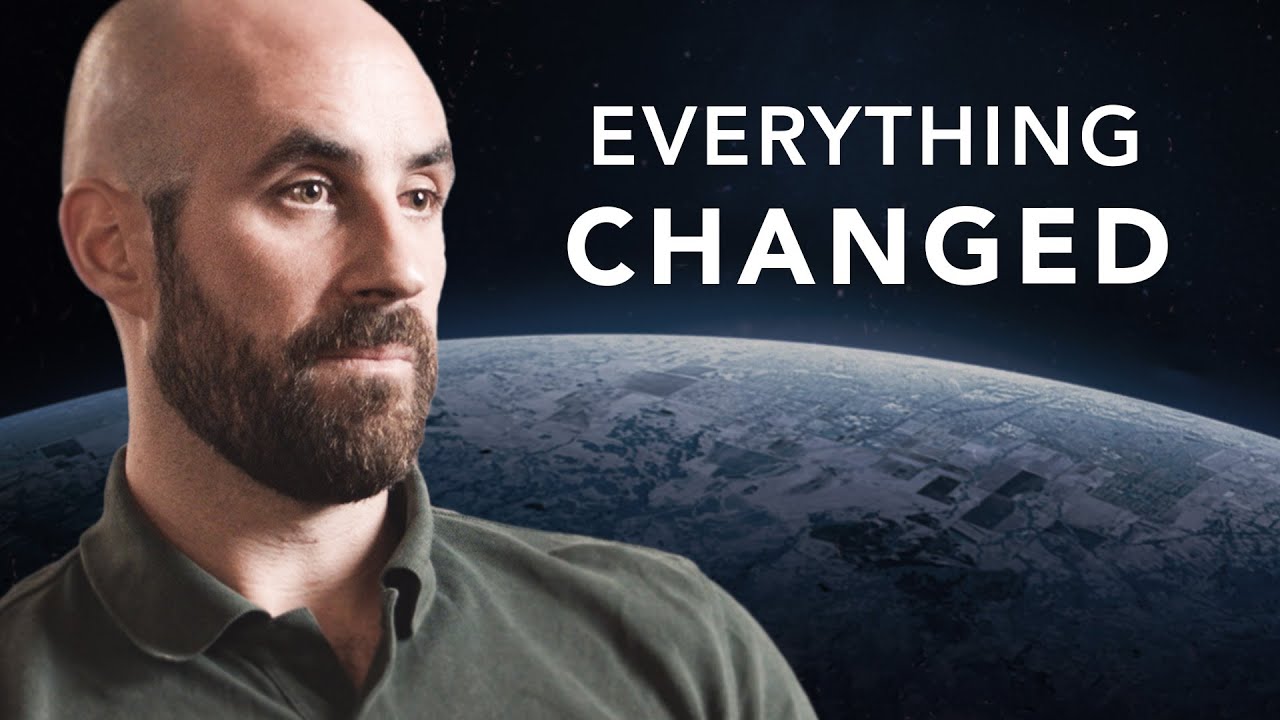
The Kid from New York Who Washed Ashore
Chris Kito grew up in New York, the oldest of three boys in what he describes as a very wonderful, loving household. All three brothers followed similar paths: lacrosse, lifeguarding, Quinnipiac University in Connecticut. But when it came time to graduate, Chris was the only one who left. He moved to Los Angeles at 23, a clean slate, knowing no one. He says he "pretty much just washed ashore" in a city where he'd have to build everything from scratch.
He went on interviews. He did the normal day-to-day grind of being young and starting over in a big city. And he carried with him something he'd carried his whole life: a peanut and tree nut allergy. He'd always had EpiPens, though more often than not they were expired. Why wouldn't they be? He'd gone 24 years without a serious reaction. He didn't know what peanuts tasted like. He'd simply avoided them, and life had gone on.
Until April 2012.
The Piece of Cake
It was a Sunday evening, nine o'clock, at a friend's birthday party in a restaurant. Chris wasn't drinking. He had a ginger ale. People were hanging around, talking, laughing. Someone started handing out slices of cake. It looked like chocolate. Chris remembers "there was nothing to have a concern about, there was nothing at all, it was just another going through the motions type moment."
He took a little piece of the cake and put it in his mouth. He swallowed. And then he thought something was raw.
"I realized after the action," he says, because you're in the moment, you're talking to people, this is something you do hundreds of thousands of times. But immediately after swallowing, he was shocked. There was a peanut in the cake.
At first, nothing. Then a little tingling on his lips, on his tongue. He drank some soda, thinking maybe that would get the tingle out of his mouth. He decided to go home. It was a Sunday night. He'd take two Benadryl, sleep well, wake up, and not have an issue.
But lying in bed, the questions started. How do I feel? Am I warm? Is the air conditioning on? Is it just a hot night? Am I breathing heavier? "All these little thoughts of is something wrong, could something go wrong, or is it just me thinking and my nervous system overreacting because of what happened."
He got up to look for his EpiPen. He found it. It was expired. He'd heard it might still work past the expiration date, but he didn't really know. He looked in the mirror. He was red. Hives on his neck, his face, his arms, his armpits. "Okay, I'm physically reacting now," he thought.
Then he noticed his breathing was getting more labored. It was getting worse and worse. He had to make a decision.
The Drive
It was a Sunday night in Los Angeles. Thank God it was a Sunday night. Around 11 o'clock, there was no one on the road. Chris decided he was going to drive himself to the hospital. His breathing was becoming significantly more difficult, but he got in his car and started driving.
He flew into the emergency room. He walked in and saw the nurse at the desk and said, "I've had an allergic reaction, I need help." She asked if he had ID.
He pulled out his wallet to get his driver's license. And that's when his motor function declined. He couldn't pull the card out. He couldn't do this simple thing. He remembers the nurse "even now, 10 and a half years later, jumping up, and then another nurse grabbing me." They each got a side of him and brought him back immediately, put him on a bed, and he was swarmed by medical staff.
The Moment of Knowing
He was on the hospital bed. They were working on him. He wasn't able to speak. He stopped speaking. He has no concept of time at that point. "Time stopped," he says.
Benadryl was going into his wrist. He had epinephrine. He was on oxygen. They were looking into his eyes, holding his mouth open. The anaphylaxis wasn't stopping. It didn't stop. They could not reverse it.
And then Chris saw it. "I remember this look of panic and sadness on the doctor's face saying, 'I'm sorry, I can't save you.'"
"And I knew in that moment I was dying," Chris says.
There wasn't any anger or hostility. There was no more pain. Nothing material mattered. He was fading out. "I was fully ready to die," he says. And then he adds something important: "And I want to be very clear, I didn't want to, I just accepted it."
In that accepting, something happened.
The Grandfathers
Chris's mother's father passed away when she was a young girl. Chris's father's father passed away when Chris was probably two or three years old. Chris had no real memory of either of them. He'd never known them in this life.
"And they came to me in that moment," Chris says.
"And they said, 'You can't die. You have work to do.'"
This is where language starts to break down, and Chris knows it. He tries to describe what happened. "It was a wave of communication," he says. "It was an all-knowing understanding. I knew it was them."
"It was nothing from this physical world," he continues. "It was them pushing me back."
In that moment, something shifted. The acceptance turned into something else. "Okay, I'm gonna fight. No, no, I can't die," Chris remembers consciously saying to himself. "No, no, I can't die. Okay, I can't die. Nope, not gonna happen."
"And in that moment, I remember being able to take a breath," he says.
"And I felt being pulled back into my physical body."
The Return
"The blissful euphoric state was gone," Chris says. "It was excruciating pain, and I just continued to fight and scrape and breathe for air."
Over the course of the next seven hours, he stabilized. The hives went away. The anaphylaxis stopped. When he asked the nurse how long he'd been there, thinking maybe 40 minutes, she said, "No, you've been here for seven hours, and you're unrecognizable from when you were walked into how you are now, and on a scale of one to ten, nine and a half, we thought you were gonna die."
Chris was discharged from the hospital. He had no understanding that he'd had a near-death experience. He just thought, oh my God, I can't believe this happened, I just got to go home and get some rest now. He always jokes that he knew he was back because he had to pay for parking. "Okay, yeah, I'm really back now," he thought.
He went home.
The Aftermath
For the next few days, it was all physical recovery. Chris was in tremendous pain for two or three days. His body was aching from the amount of drugs he'd been pumped full of to start breathing again.
Then, around the third day, after the pain was gone, he went outside. He smelled a rose. "And I never had a good sense of smell ever in my life, and I smelt that rose perfectly, and I remember just bursting out in tears."
He had these moments, crying over the rose. His vision was off. It was resetting. He was avoiding sunlight. His reaction to things emotionally and mentally shifted. "I woke up every day for six to seven months not knowing who I was on an emotional, spiritual, mental level," Chris says.
During that time, he had no idea what a near-death experience was. He'd never heard the acronym. He just had no idea what was going on. Then, browsing the internet one day, he thought, I gotta find something, there's got to be something on here of what happened. He stumbled across the IANDS website. It listed about 30 traits, physical, mental, emotional. Chris had 29 out of the 30. "Okay, there's something happened here," he thought.
He connected with a leader in the community and spoke with her. He said, "I have no idea what's going on. I said I don't know who I am, I don't know what I'm doing, this is what happened," and he laid out everything. "And she says, 'Oh honey, you had a near-death experience.'"
That conversation gave him a frame for what happened, other than just suffocating to death on a hospital bed. It gave him space to explore the spirituality of it. He'd been open to psychics and mediums before, so he had some background. But for years, if anyone asked what happened, he immediately shut it down. If he did talk about it, it was only 50 percent of the story, just the physical medical emergency. Nothing about the spirituality. Nothing about his grandfathers. "That process took years to come out," Chris says. And the integration? "It's still an integration. It's a lifelong journey."
Chris has shared his story in multiple interviews over the years, including a detailed account with Anthony Chene production and discussions with Crossing Over NDE and the Passion Harvest Podcast. He's also spoken at IANDS conferences about finding support and understanding after an NDE.
Five Percent and Ninety-Five Percent
"Speaking as an experiencer," Chris says, "I feel the NDE is five percent of the story, and then 95 percent of the story is what you're doing afterwards."
"I shouldn't have survived. By any account, I should have passed away that night," he says. "I am fortunate to be here. I have been given a second chance. What am I going to do with it?"
"That's what's really guided me in my life from that point on," Chris says. "Can I move the needle a little bit, any way I can, even if it's something so small as just picking up a piece of garbage? Being aware and trying to add to the positive. Not here to save the world, but can I take a higher level of consciousness? Can I be in a state of gratitude given everything that's happened?"
For eight years, Chris didn't speak about his experience fully. Then he made a decision. "I wanted to give back," he says.
"Maybe that's my way of saying thank you to the universe," Chris says. "I gotta pay someone back for this. I don't know if it's an energy, God, this, I, none of my business, but I know for myself, deep down, I owe thank you to someone or something."
What This Experience Reveals
Chris Kito's account sits at the intersection of several of the most commonly reported features of near-death experiences. The appearance of deceased relatives, particularly those the experiencer never knew in life or barely remembers, is one of the most striking patterns in NDE literature. These aren't vague presences or wishful projections. They're recognized instantly, with absolute certainty, even when there's no logical basis for that recognition. Chris was two or three years old when his paternal grandfather died. He had no real memory of him. Yet when both grandfathers appeared, he knew them. He didn't wonder. He didn't question. He knew.
The communication he describes, what he calls "a wave of communication" and "an all-knowing understanding," is another hallmark. Experiencers consistently report that communication on the other side happens without words, without the clunky back-and-forth of human language. It's direct, immediate, complete. You don't hear a sentence and process it. You receive the entire meaning, the entire context, the entire emotional truth of what's being conveyed, all at once. It's not telepathy in the science fiction sense. It's something more fundamental: thought itself, unmediated by the limitations of a physical body.
And then there's the message: "You can't die. You have work to do." This is the single most common reason experiencers give for why they returned. Not because the doctors saved them. Not because the medical intervention finally worked. But because something or someone on the other side told them it wasn't their time, that they had unfinished business, that their life had a purpose they hadn't yet fulfilled. Chris doesn't know what that work is. He's spent ten years trying to figure it out. But he came back with the bone-deep certainty that he was supposed to.
What's particularly striking about Chris's story is the acceptance. He wasn't fighting. He wasn't bargaining or pleading. He'd let go. He was ready. And it was in that state of complete surrender that his grandfathers intervened. They didn't ask. They pushed. They sent him back. And when he returned, the blissful euphoric state was gone, replaced by excruciating pain. But he fought. He chose to fight, not because he wanted to suffer, but because he'd been told he had to.
The aftereffects Chris describes, the sensory changes, the emotional upheaval, the months of not knowing who he was, these are textbook NDE integration challenges. The enhanced sense of smell, the vision changes, the emotional sensitivity, these aren't psychological. They're reported so consistently across thousands of accounts that researchers now consider them part of the NDE phenomenon itself. Something happens to the brain or the nervous system or the relationship between consciousness and body during these experiences. We don't fully understand it yet, but it's real, it's measurable, and it's life-altering.
Chris's decision to speak publicly about his experience, after eight years of silence, reflects something else we see often: the pull to give back, to be of service, to help others who are struggling or searching or grieving. He doesn't know who will hear his story or how it will help them. But he knows, deep down, that this is part of why he came back. To tell people what he saw. To tell them what his grandfathers told him. To tell them that death isn't the end, that love doesn't stop, that we're here for a reason even if we can't always see it.
There's a humility in how Chris talks about all of this. He doesn't claim to have all the answers. He doesn't know if it was God or energy or something else entirely. He just knows what happened to him. He knows he was dying. He knows his grandfathers came. He knows they pushed him back. And he knows he's supposed to do something with this second chance, even if he's still figuring out what that is.
What his experience suggests, and what thousands of other NDEs suggest, is that consciousness doesn't end when the body fails. That the people we love don't disappear when they die. That there's something on the other side that knows us, that cares about us, that sometimes intervenes to send us back because our work here isn't finished. Chris didn't want to come back. He'd accepted death. But his grandfathers had other plans. And now he's here, ten years later, telling his story, hoping it helps someone, somewhere, who needs to hear it.
That's not a small thing. That's not nothing. That might be exactly the work they were talking about.
Was this article helpful?