Anna Stone's NDE: A Scientist Dies and Meets Herself on the Other Side
A research scientist for DARPA flatlines for six minutes and returns with a message from another version of herself
Anna Stone was floating near the ceiling of the hospital room, watching doctors work frantically on the body below. She heard the flatline. She saw them trying to resuscitate her. And she felt absolutely nothing about it. Her one conscious thought, delivered in her characteristically flat affect, was: so that was it. Then came the realization that made her pause: her snarky personality was still intact. She was still Anna, still herself, still thinking in her own voice, just without a body. For a research scientist who'd spent years working on government contracts for the Department of Defense and DARPA, who'd dismissed near-death experiences as unscientific hogwash, this shouldn't be possible. But here she was, dead for what would turn out to be just under six minutes, and consciousness wasn't ending. It was expanding.
The Scientist Who Didn't Believe
Before November 8, 2016, Anna Stone lived in two worlds that never quite reconciled. On one hand, she was a research scientist, analytical to her core, working on classified projects for the government. "Analytically, there's nothing to any of this near-death stuff," she'd tell herself. "It's hogwash. It's not scientific, it doesn't hold up under scientific scrutiny."
On the other hand, she'd been drawn to tarot and witchcraft as a kid. She'd had what some people might call paranormal experiences growing up. But she always managed to explain them away, rationalizing until they fit into her worldview. Science won. Science always won.
At 38, Anna was in what she describes as a bad time in her life. Really bad. She was drinking heavily, trying to numb inner trauma she hadn't yet resolved. Her marriage was toxic. And then the bleeding started. Her cycle just kept going and going. She joked to her family that she was "bleeding to death." The next thing she remembers, she's in the hospital.
She'd fainted. A ruptured ectopic pregnancy. She'd already lost nearly half the blood volume in her body.
The Sensation of Dying
Anna describes the moment before death as "extreme panic of something being very wrong, very very wrong." It was a feeling of intense pressure, like she was going to explode. She could feel all the cells in her body doing something, and it wasn't comfortable at all.
Then, the minute it became unbearable: poof.
"I'm not in my body anymore," Anna says. "I go up to the ceiling just like a balloon, I guess." She realized, oh crap, she wasn't in her body anymore. She could see herself below. That's when she heard the machine make the flatline sound.
She watched the people in the room come and try to resuscitate her. And here's what struck her most: she had no attachment to it at all. Her one conscious thought was flat, emotionless: so that was it.
But then came the second realization, the one that would haunt her for months: "Oh crap, my snarky personality is still intact. I'm out of my body, so I'm still me. That's weird." She'd never really pondered this before, because it shouldn't be possible.
While floating there, she heard some of the doctors' comments. One mentioned her medical records, noting a former addiction to medication. "What do we expect? She was just some drug addict," the doctor said. Anna had been off those medications for eight years. She wasn't offended at the time, she clarifies, but she was furious when she came back.
Checking on Her Children
Then came the thought of her children. Where were they? Were they going to be okay?
The moment she had that thought, Anna was "instantly taken" to her oldest daughter, who was 210 miles away at her college in Fresno. She saw her sitting at her desk, taking an exam. Okay, she's fine.
What about her little one? Instantly, she was taken back to the hospital waiting room, where she saw her daughter Lucy, barely two at the time, playing with Legos. Okay, she's fine.
This is one of the most commonly reported features of NDEs: the ability to check on loved ones across vast distances, to see them in real time, as if physical space has collapsed into pure intention. Anna didn't travel. She simply thought of her daughters, and she was there.
The Room That Isn't on Earth
Then Anna realized something strange. If she looked to the right, she was looking in the hospital. But if she glanced to her left, she wasn't in the hospital anymore. She was somewhere else.
"I can't really describe where that somewhere else is," Anna says, "but it's not on Earth." It was a yellowish-white room, though she didn't really see walls. She just knew it was a room. No tunnel. No dead relatives. No religious figures. She was by herself, but not by herself. She could feel other things around her.
And she realized several things at once.
One: "I'm enormous. I am everywhere and nowhere at the same time."
Two: she didn't have a body. No eyes, no ears, no physical form.
Three: she could see in 360-degree vision. Behind her, to the sides, above, below, just by thinking it. It didn't freak her out. It was just fact.
This description matches what many experiencers report: consciousness without the constraints of a body, perception without sensory organs, awareness that's both localized and infinite. Anna was experiencing what she'd spent her career dismissing as impossible.
Meeting Herself
Then, suddenly, there was another person standing in front of her. Except it wasn't another person.
It was her.
"It was like my physical self, but not quite," Anna explains. "It looked like me, literally, like my twin, but there's a little difference in features, a little difference in hair or something. But it's me, and I'm very aware that this is a version of me."
She knew she was going to talk to herself. She can't explain how she knew, but she did.
Then came the message, transmitted telepathically: "Nope."
That's it. One word. Not "no," but "nope," the way Anna herself would say it in regular life. And she instantly knew that meant she wasn't staying. She was going back.
This encounter, brief as it was, raises questions that Anna has spent years unpacking. Who was this other version of her? Was it her higher self, the part of her consciousness that exists beyond this one lifetime? Was it a future version, a parallel version, a representation of her soul's totality? Anna describes it simply: "I instantly knew that this is a version of me."
Many experiencers report meeting guides or deceased loved ones who deliver messages. Far fewer report meeting themselves. When it does happen, it often comes with the same sense of recognition Anna describes: not confusion, not surprise, but immediate knowing. This is me. This has always been me.
The Painful Return
What happened next was the opposite of peaceful.
Anna's "enormousness" got focused into one stream that went shooting back into her body via her navel. And it hurt. Really bad. It was physically painful.
This was when she saw the tunnel, but only going back in. "I think I understand that it was focused back into my navel, so therefore I had to be in a beam rather than being dispersed like I was previously," she explains.
She describes the sensation like this: imagine someone holding your head underwater and you're about to drown, right at that moment of opening your mouth to breathe in water instead of air, but then they let go and you breach the surface and gasp for that air you need so desperately.
Anna shot up on the table and gasped, a loud, shocking gasp that stunned everyone in the room. The pain mixed with the lack of oxygen brought her back.
And she knew instantly what had happened. She knew she'd died. She knew she'd left her body. And she was very upset about this, because "this shouldn't happen, this shouldn't be possible."
The Validation
Anna's first instinct was to explain it away. It had to be her neurons misfiring as she died. Hallucinations. Lack of oxygen to the brain. So she started asking the staff questions.
Did you say something about my medical records? Did you mention the medication problem?
The staff was in shock. They'd stopped working on her and were filling out forms. She was still hooked up to the EKG monitor, and there had been no beep ahead of time to warn them she was coming back. One guy looked very concerned, frozen in place.
That's when it sank in. "Oh crap, because I was hoping they were gonna be like, no, that has to be hallucination, lack of oxygen to the brain, whatever. But they validated it."
She asked how long it had been since they'd called time of death. Just under six minutes.
Not that long, Anna notes. But it was enough to change everything.
The Aftermath: Instant Transformation
The first change was immediate and inexplicable. Anna could no longer drink alcohol. Not wouldn't. Couldn't. Literally, physically couldn't.
She'd been using alcohol to numb unresolved trauma. The first thing she tried to do after returning home was drink a beer. "It literally made me sick. I couldn't even swallow it. It went into my mouth and it just turned warm and foam and became nothing that was liquid to drink anymore. It was bizarre."
Her doctors had no explanation. This wasn't a known side effect. They told her to take it as a blessing. So she did. Her addiction to alcohol ended within six minutes. Literally. Six minutes, and it was over.
Then other changes started happening, rapidly and significantly. Anna had been doing science, but it wasn't fulfilling. Suddenly, she felt an undeniable urge to be a teacher. Within a couple months, she had a job teaching troubled youth, and she found it "super rewarding" and much more in line with what she was supposed to be doing.
She realized she'd been telling her students to finish college, but she hadn't finished her own undergrad. She'd been hired out of college to work for the VA and UCLA, got too busy with work, and life got in the way. So she went back. Finished her undergrad. Then her Master's. Now she's in a second Master's and concurrent PhD program in psychology and consciousness studies, a completely different path than the hard science she'd been doing before.
Anna's whole focus became "being of service to other people." The NDE triggered a need and desire to heal her really traumatic childhood, the "really heavy stuff" that happened. The event "has led me down this path that's just become truly amazing for me and transformative by no little measure."
Understanding the Message
After Anna got released from the hospital, she started beating herself up. How horrible that she wasn't more upset about her children. Why hadn't she focused on who was going to take care of them? What would happen to them? These are the things a parent would consider here on Earth, right?
It took time for her to understand: when we're on the other side, we don't have negative emotions. She hadn't figured that part out yet. But later, she realized something else.
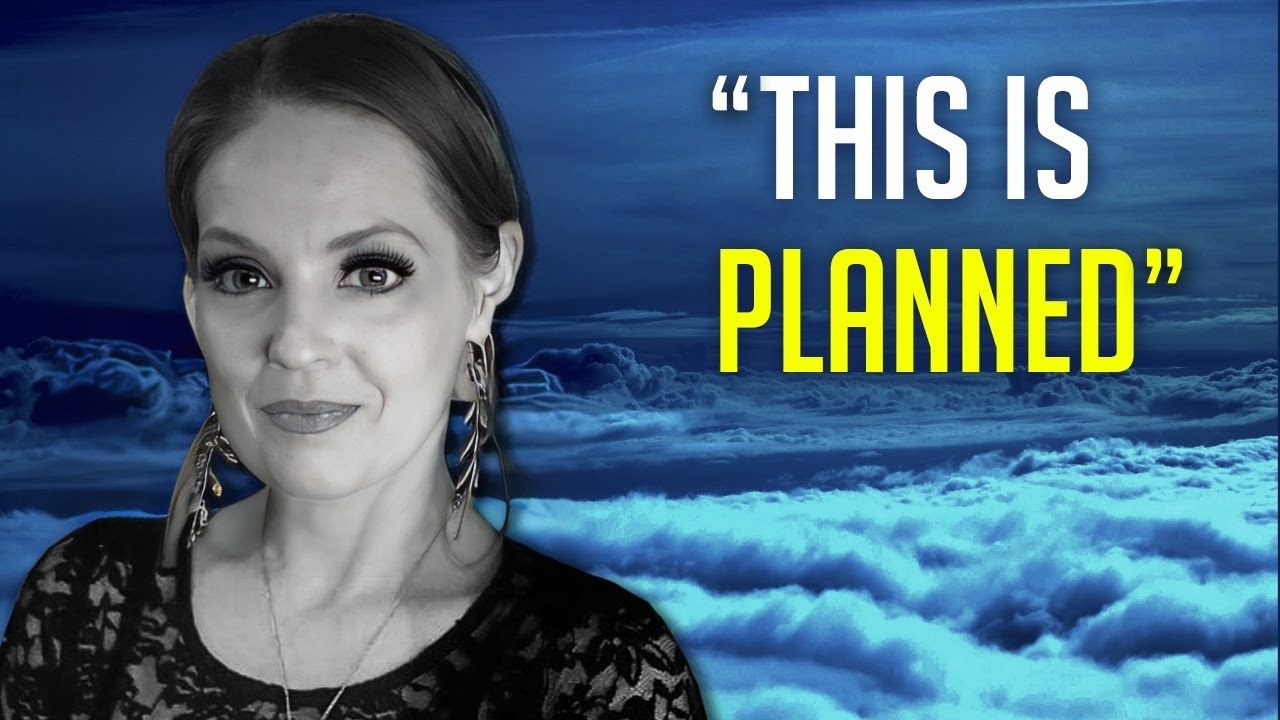
This had already been planned. This was something she'd already written out for herself. She'd seen ahead of time that she might get off the rails a bit in her life, and this was a reset, a "karmic reset" as she calls it.
That one-word message from her other self, "nope," has unraveled into many other messages. It "has helped change the course of the direction of my life and everything," Anna says.
In other interviews, Anna has elaborated on what she learned from this experience and how it's shaped her work in consciousness studies. You can hear more of her story in her conversation with Beyond the Veil and Divine Encounters NDE, where she discusses what being shown the other side changed about everything she believed.
What This Experience Reveals
Anna Stone's account is remarkable for several reasons. First, there's the veridical evidence: she accurately reported conversations that occurred while she was clinically dead, which the medical staff confirmed. This wasn't a dream or hallucination. She heard specific words spoken in the room while her heart wasn't beating.
Second, there's the radical shift in personality and behavior that happened instantly. The sudden, complete inability to drink alcohol isn't psychologically typical of addiction recovery. It's as if her body chemistry was rewritten in those six minutes. This kind of immediate, permanent transformation is reported by many NDErs, but it remains medically unexplained.
Third, there's the encounter with another version of herself. This isn't a common NDE feature, but when it happens, it often comes with the same quality Anna describes: instant recognition, telepathic communication, and a sense that this other self exists outside of time and holds a broader perspective on the experiencer's life path.
But what strikes me most about Anna's story is how it dismantled her worldview from the inside. She wasn't a casual skeptic. She was a research scientist working on classified government projects, someone who'd built a career on empirical evidence and analytical rigor. She'd spent years explaining away her own paranormal experiences, forcing them into a materialist framework.
And then she died. And consciousness didn't end. It expanded. She was still herself, still thinking in her own voice, still snarky, still Anna, just without a body. For someone with her background, this shouldn't be possible. But it was. And the evidence was undeniable.
Anna's transformation afterward, the complete redirection of her life toward service and healing, isn't unusual among NDErs. What's unusual is the speed and totality of the change. Within months, she'd left her old career path, become a teacher, gone back to school, and committed to studying the very phenomenon she'd once dismissed. That's not the behavior of someone who had a hallucination. That's the behavior of someone who encountered something so real, so undeniable, that it rewrote the operating system of her life.
The message she received, "nope," might seem flippant at first. But it's deeply personal. It's delivered in her own speech pattern, her own casual way of talking. It's a message from a version of herself that exists outside this one lifetime, a version that could see the bigger picture, the path she'd planned, the reset she needed. And it worked. Anna came back and rebuilt her life from the ground up.
This is what NDEs do. They don't just change beliefs. They change the experiencer at a fundamental level, often instantly and permanently. They provide direct, firsthand knowledge that consciousness is not produced by the brain, that we are more than our bodies, that death is not the end. For Anna, a scientist who'd spent her career in the realm of the measurable and provable, this knowledge came at the cost of everything she thought she knew. And she's spent the years since trying to understand it, study it, and share it with others.
What Anna's story reveals is something we see again and again in these accounts: we are eternal beings having a temporary physical experience. We plan our lives before we come here. We have guides, higher selves, versions of ourselves that exist beyond time and space. And when we die, we don't cease to exist. We expand. We return to a state of being that's more real, more vivid, more fundamentally us than anything we experience in these bodies.
Anna went into that hospital room as a skeptical scientist in crisis. She came back as someone who knows, beyond any doubt, that consciousness survives death. And she's devoted the rest of her life to helping others understand what she learned in those six minutes: we are so much more than we think we are, and what awaits us on the other side is not an end, but a homecoming.
Was this article helpful?